Understanding carry-on luggage size limits for airlines is one of the most important parts of stress-free travel. Many passengers arrive at the airport excited for their trip, only to find their bag is too large and must be checked. This can lead to unexpected fees, delayed travel, and unnecessary stress.
Every airline has official carry-on luggage size limits, and these rules can change between domestic and international flights. Budget airlines are often much stricter than major full-service carriers. Knowing these limits before you buy luggage or pack your bag can save you time, money, and frustration. This guide covers all the key details you need to follow airline rules on every trip.
Standard Carry-On Luggage Size Limits for Major Airlines
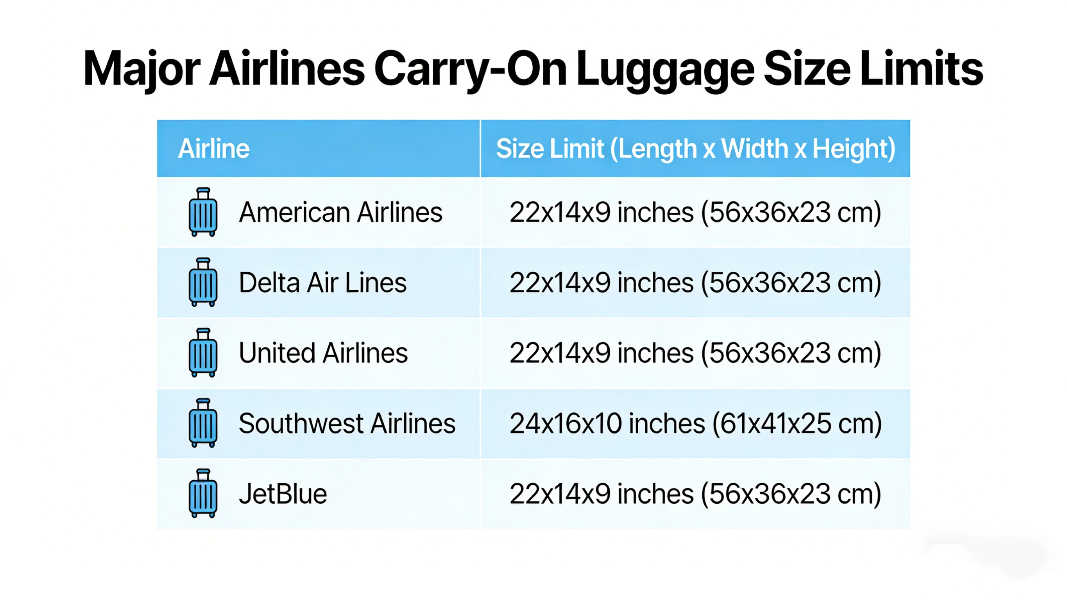
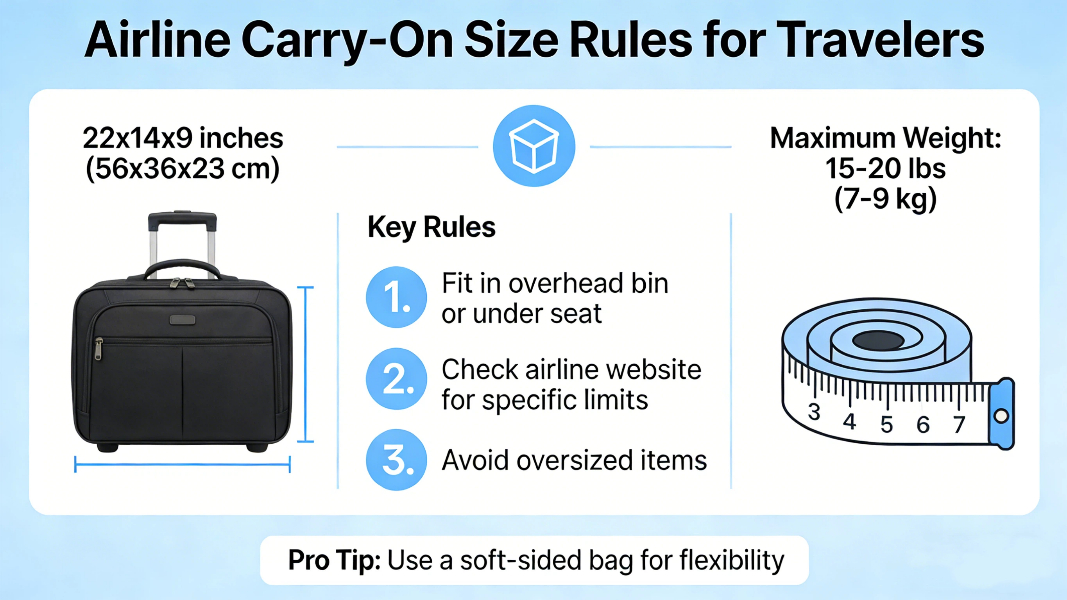
Most major airlines in the United States follow similar carry-on luggage size limits. The standard accepted size is 22 x 14 x 9 inches, including wheels, handles, and all external pockets. This size fits in most overhead bins and meets the requirements for Delta, American, United, and other popular carriers.
Many international airlines use the same or very similar measurements. This standard size has become the most common choice for luggage brands because it works for the widest range of airlines. If you want a bag that works for nearly every flight, sticking to this standard size is the safest choice.
Even if you fly with different airlines, a bag within these standard carry-on luggage size limits will rarely cause problems on major flights.
Carry-On Rules for Budget Airlines
Budget airlines have much stricter carry-on luggage size limits compared to major airlines. Many budget carriers only allow small personal items under the seat for free. A standard carry-on bag may require an extra fee or be denied entirely.
Some budget airlines limit carry-on size to 20 x 16 x 8 inches or even smaller. These strict rules are designed to encourage passengers to pay for checked bags. Before you fly with a budget airline, always check their exact size policy online.
Failing to follow budget airline limits is the most common reason travelers pay unexpected baggage fees. Knowing these small carry-on luggage size limits can save you a lot of money.
Why Wheels and Handles Count Toward Size Limits
Many travelers make the mistake of measuring only the main bag body, but airlines include wheels and handles in their carry-on luggage size limits. Every part of the bag, including external parts, counts toward the total measurement.
This means a bag without wheels may fit the rules, but the same bag with wheels could be too large. When shopping for luggage or measuring before a flight, always extend the handle and include the wheels in your measurement.
Airlines enforce this rule strictly, especially at busy gates and on crowded flights. Don’t risk having your bag rejected over a small measurement difference.
International vs. Domestic Carry-On Size Rules
International flights often follow similar carry-on luggage size limits as domestic flights, but there are important differences. Some international airlines have slightly smaller size limits, especially in Europe and Asia.
Long-haul international flights may have more flexible rules due to larger overhead bins, but you should never assume your bag will be accepted. Always check the official airline guidelines for your specific international route.
Following standard carry-on luggage size limits is the best way to avoid problems whether you’re flying domestically or internationally.
How to Measure Your Carry-On Luggage Correctly
Measuring your bag properly is essential to meet carry-on luggage size limits. Use a tape measure to check the height, width, and depth of your bag. Include wheels, handles, zippers, and external pockets.
Write down these measurements and compare them to your airline’s official rules before you leave for the airport. If your bag is even slightly over the limit, consider using a different bag or packing less.
Taking a few minutes to measure your bag can prevent expensive fees and travel delays.
Tips to Fit Within Carry-On Luggage Size Limits
If you want to always stay within carry-on luggage size limits, there are several simple tips to follow. Choose a bag designed specifically for standard airline limits. Avoid oversized bags that look stylish but break airline rules.
Soft-shell bags are more flexible and can squeeze into small spaces better than rigid hard-shell bags. Pack lightly to avoid overstuffing, which can make your bag expand past the allowed size.
You can also use packing cubes to organize items efficiently and keep your bag from bulging. These small changes make it much easier to follow every airline’s rules.
Final Guide to Carry-On Luggage Size Limits for Airlines
Understanding and following carry-on luggage size limits for airlines will make every trip smoother and cheaper. Stick to the standard 22 x 14 x 9 inches for major airlines, and research stricter budget airline rules before you fly.
Always measure your bag including wheels and handles, and prepare before you arrive at the airport. With the right luggage and simple planning, you can avoid baggage fees and travel with confidence.
Knowing carry-on size rules is one of the most useful skills for any frequent or casual traveler.