Not sure how to choose carry-on luggage that fits your travel needs, budget, and airline rules? As a beginner, it’s easy to get overwhelmed by the endless options—different sizes, materials, wheel types, and features can make learning how to choose carry-on luggage feel impossible. With so many brands and styles on the market, many first-time travelers end up buying a bag that is too big, too heavy, or uncomfortable to use. This complete guide breaks down everything you need to know to pick the perfect carry-on luggage, from understanding airline size limits to choosing the right material and design. By the end, you’ll have all the tools to make a confident choice that saves you time, money, and stress on your next trip.
1. Standard Airline Carry-On Size Limits You Need to Know
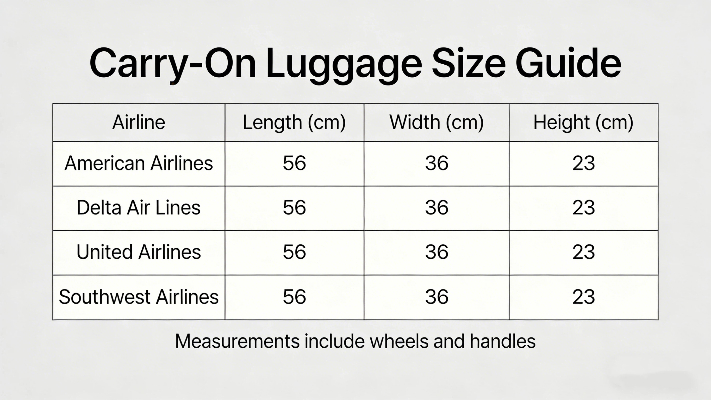
If you want to know how to choose carry-on luggage the right way, the first and most critical thing to consider is airline size restrictions. Every airline has different rules for carry-on dimensions, and if your bag is too big, you’ll be forced to check it—adding extra fees and risking damage to your belongings. Most major airlines in the United States, including Delta, American Airlines, and United, have a standard carry-on size limit of 22 x 14 x 9 inches (56 x 36 x 23 cm), including wheels and handles.
International airlines often have similar rules, but some may be stricter for budget flights. However, some budget airlines (such as Spirit or Ryanair) have smaller size limits and charge high fees for bags that do not fit. That is why you must always check your airline’s specific rules before buying new luggage.
Pro tip: Measure your carry-on luggage before your trip, including all protrusions like wheels and handles. If it’s even 1 inch over the limit, you may be asked to check it. For frequent travelers, choosing a bag that fits the strictest airline rules will save you hassle in the long run.
2. Hard Shell vs. Soft Shell Carry-On Luggage: Which to Choose
A big part of how to choose carry-on luggage is deciding between hard shell and soft shell designs. Carry-on luggage comes in two main material types: hard shell and soft shell. Each has its own advantages and disadvantages, so your choice should depend on how you travel, what you pack, and your personal preference. Many beginners struggle with this decision, but understanding the differences will help you pick the best option.
Hard Shell Carry-On Luggage
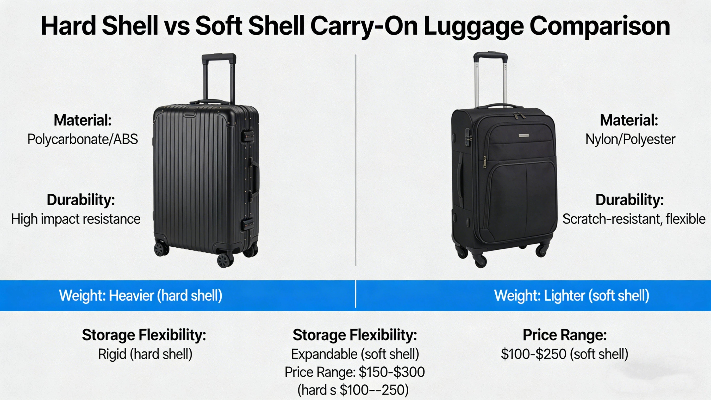
Hard shell carry-ons are made from materials like polycarbonate (PC), ABS, or polypropylene (PP). They’re known for their durability and ability to protect your belongings from impacts, scratches, and moisture. This makes them ideal for international travel, business trips, or anyone who packs fragile items like electronics or souvenirs.
Hard-shell luggage is also waterproof and easy to clean, which is great for rainy weather or dirty travel spaces. It keeps your clothes clean and safe even when the bag is placed on rough surfaces.
Pros: Excellent protection, water-resistant, easy to clean, modern design. Cons: Less flexible, can be heavier than soft shell options.
Soft Shell Carry-On Luggage
Soft shell carry-ons are made from fabrics like nylon, polyester, or canvas. They’re lightweight, flexible, and often expandable—perfect for travelers who tend to overpack or need extra space. The flexibility also makes it easier to fit the bag into small overhead bins or under the seat in front of you.
Soft-sided bags usually have more external pockets, making it simple to reach your phone, passport, or water bottle without opening the main compartment.
Pros: Lightweight, flexible, expandable, external pockets for quick access. Cons: Less protection for fragile items, easier to scratch and stain.
3. Best Wheel Types for Carry-On Luggage
Another key factor when you’re learning how to choose carry-on luggage is wheel quality. The wheels on your carry-on luggage can make a huge difference in your travel experience, especially in busy airports and train stations. Many people ignore wheel quality when buying luggage, but bad wheels can make your trip tiring and frustrating. There are two main wheel types to choose from:
4-Wheel Spinners: These bags have four wheels that rotate 360 degrees, allowing you to push, pull, or glide the bag in any direction. They’re ideal for travelers who walk long distances or need to maneuver through crowds. Spinner wheels work great on smooth airport floors and make luggage feel much lighter. Look for rubber or polyurethane (PU) wheels for durability and smooth rolling.
2-Wheel Rollers: These bags have two wheels and are designed to be pulled behind you. They’re more durable than spinners and work well on rough terrain like cobblestone streets, but are less maneuverable. Roller wheels are less likely to break, making them a good choice for outdoor travel or uneven surfaces.
4. How to Choose Lightweight Carry-On Luggage
Weight is another major point to understand when you want to master how to choose carry-on luggage. While most airlines don’t set strict weight limits for carry-on luggage, some international and budget carriers do. Even if there’s no weight limit, a heavy carry-on can also be hard to lift into overhead bins and cause fatigue during your trip.
A heavy bag will only make your journey more difficult, especially if you walk long distances through airports. Aim for a carry-on that weighs 7–10 pounds (3–4.5 kg) when empty. This weight range is light enough to carry easily but strong enough to hold all your essentials.
Pro tip: Choose lightweight materials like polypropylene (PP) for hard shell bags or nylon for soft shell bags. Avoid heavy extra features like metal frames to keep weight low. Lightweight luggage helps you avoid airline weight fees and reduces physical strain while traveling.
5. Essential Features to Look for in Carry-On Luggage
Knowing which features matter most will make how to choose carry-on luggage much easier. Not all carry-on luggage is equal. These useful features will greatly improve your travel experience and help you organize your items better. When shopping for a new bag, pay attention to these important details:
– Expandable Design: Adds 2–3 inches of extra space for souvenirs and extra items. This is perfect for shoppers or people who bring back gifts.
– Padded Laptop Compartment: Protects 13–15 inch laptops during travel. Many business travelers need this feature for work devices.
– External Pockets: For quick access to passport, boarding pass, phone, and water bottle. This saves time at security checks and boarding gates.
– TSA-Approved Lock: Keeps belongings secure without damage during security checks. TSA locks allow officials to open your bag without breaking the lock.
– Adjustable Telescopic Handle: Fits your height with a comfortable, sturdy grip. A good handle prevents back pain and makes the bag easy to roll.
6. How to Set a Budget for Carry-On Luggage
Your budget also plays a role in how to choose carry-on luggage that’s right for you. Carry-on luggage prices range from $50 to $500+. Setting a clear budget helps you find the best value without overspending. Many beginners buy the cheapest bag they find, but low-quality luggage often breaks after a few trips.
Mid-range options ($100–$200) usually offer the best balance of durability, features, and price. These bags use quality materials and include useful features like spinner wheels, TSA locks, and padded compartments.
Frequent travelers (3+ times a year) should invest in a high-quality PC or nylon bag. These bags last for years and handle constant use better than cheap options. Occasional travelers can choose a reliable budget option ($50–$100) as long as it meets airline size rules.
Final Tips to Remember When You Learn How to Choose Carry-On Luggage
Choosing the right carry-on luggage doesn’t have to be complicated. Now that you know how to choose carry-on luggage properly, you can focus on airline size limits, material, wheel type, weight, useful features, and your budget. The best carry-on luggage is functional, durable, and fits your travel habits—not the most expensive or trendy option.
Always measure your bag before flying, test the wheels and handle before buying, and choose a style that matches your travel style. By following this guide, you’ll pick a carry-on that makes your trips smoother, less stressful, and more enjoyable. Happy travels!