Knowing TSA approved carry-on luggage rules is essential for anyone traveling through US airports. Many travelers face delays, extra checks, or confiscated items because they don’t understand current TSA guidelines. These rules affect what you can pack, how you pack it, and what type of luggage you should use.
TSA approved carry-on luggage rules are designed to keep travel safe and efficient. Following these rules makes security lines faster, reduces stress, and helps you avoid losing items during screening. Whether you travel occasionally or frequently, understanding these rules will greatly improve your airport experience.
This guide covers all the most important TSA guidelines for carry-on luggage and packing.
What Makes Luggage TSA Approved for Carry-On
When people talk about TSA approved carry-on luggage, they mostly refer to bags that follow general size rules and include TSA-friendly features. The TSA does not approve or certify specific luggage brands, but some design elements make security screening much easier.
Luggage that opens fully for easy inspection, has clear internal compartments, and uses TSA-approved locks is considered ideal for carry-on travel. These features help TSA agents check your bag quickly without damaging your belongings.
Understanding TSA approved carry-on luggage rules helps you choose a bag that speeds up your trip through airport security.
TSA Liquid Rules for Carry-On Luggage
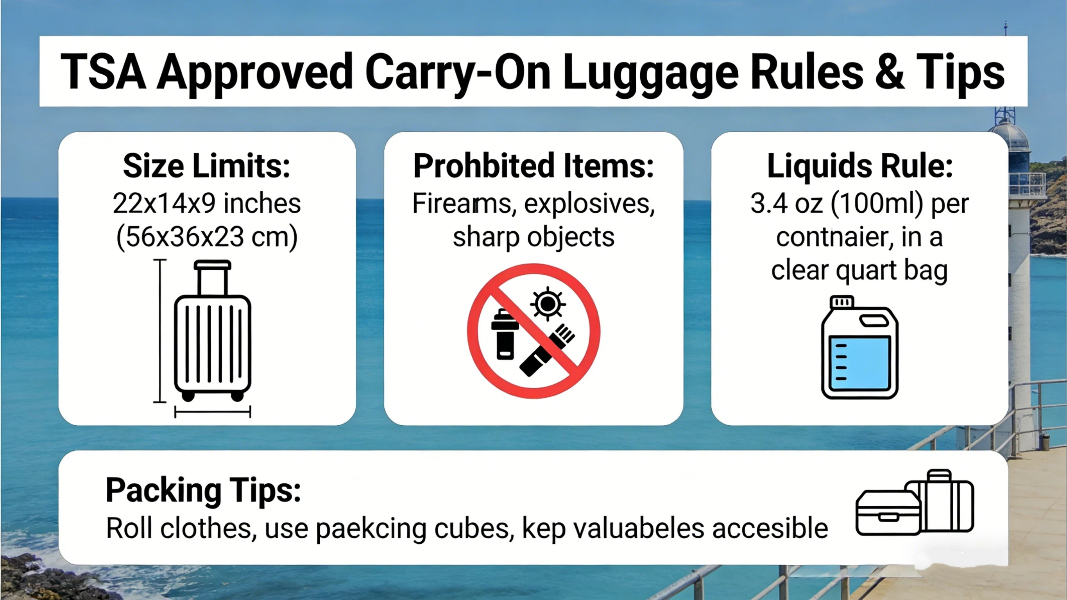
One of the most important TSA approved carry-on luggage rules involves liquids. All liquids, gels, and aerosols must follow the 3-1-1 rule. Each container must be 3.4 ounces (100ml) or smaller. All containers must fit inside one clear, quart-sized plastic bag.
Each passenger is limited to one clear plastic bag for liquids. Larger liquids, including water, coffee, and toiletries over 3.4 ounces, are not allowed in carry-on luggage. These items must be packed in checked bags or thrown away before security.
Knowing this rule prevents the most common delays and confiscations at airport security checkpoints.
TSA Rules for Electronics in Carry-On Luggage
Electronics are heavily regulated under TSA approved carry-on luggage rules. Laptops, tablets, and large electronic devices must be removed from your bag during screening. These items are scanned separately from your clothes and other belongings.
Using a bag with a dedicated laptop compartment makes following this rule much easier. The laptop compartment should open flat for quick and simple inspection. Smaller electronics like phones, headphones, and smartwatches can usually stay in your bag.
Always check the latest TSA guidelines before you travel, as rules for specific electronics can change occasionally.
TSA Approved Locks for Carry-On Luggage
TSA approved locks are an important part of TSA approved carry-on luggage rules. These special locks allow TSA agents to open and re-lock your bag without damaging it during random inspections.
Regular locks can be cut or broken if agents need to inspect your bag. TSA-approved locks have a special symbol that identifies them for security staff. Using these locks protects your belongings while following airport security rules.
This is one of the most popular features for travelers who want both security and convenience.
Food and Snacks in Carry-On Luggage
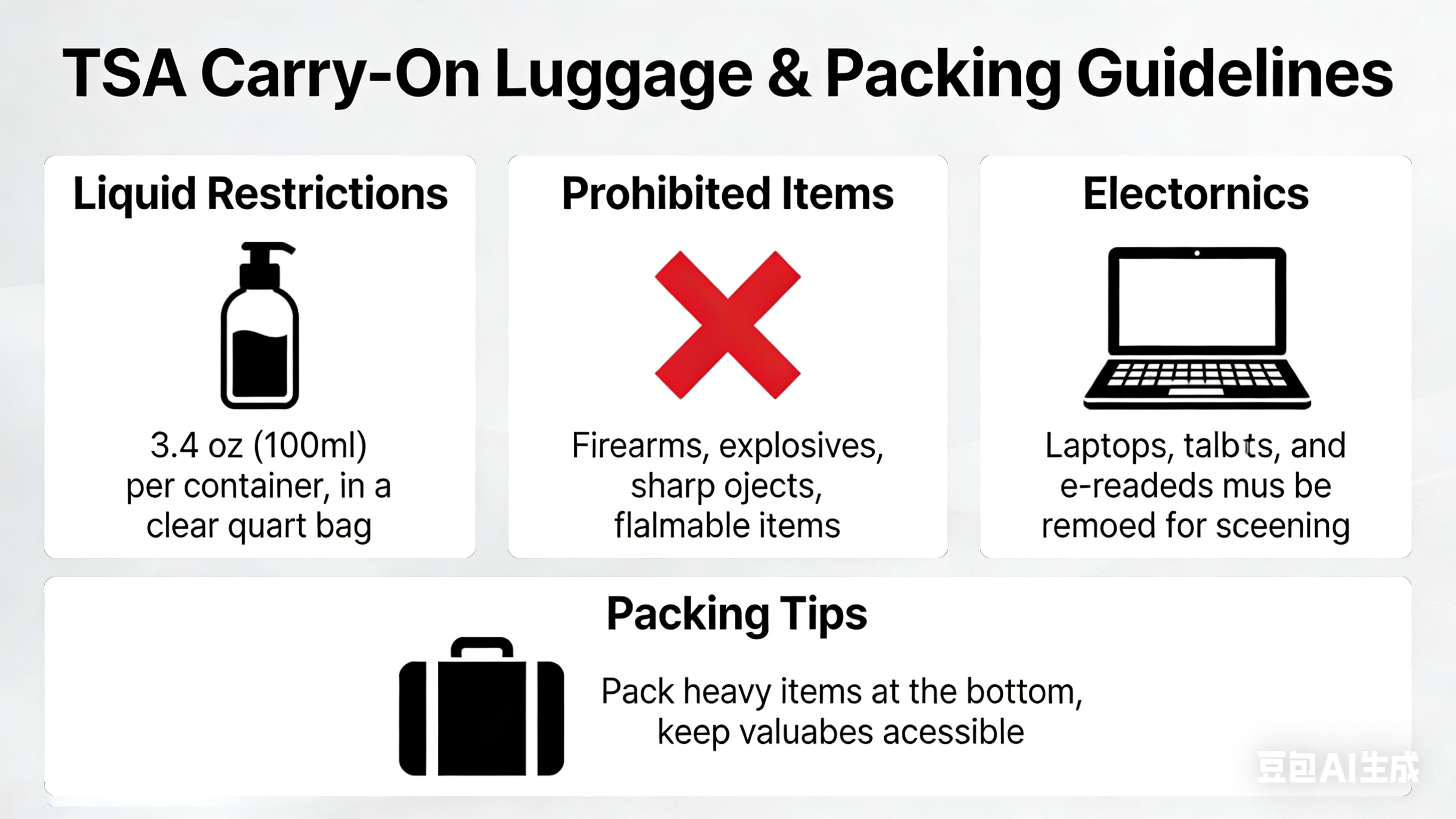
Many travelers are unsure about food rules under TSA approved carry-on luggage rules. Solid foods like sandwiches, candy, chips, and baked goods are generally allowed in carry-on bags. Liquid or gel-like foods such as yogurt, sauces, and soups follow the 3-1-1 liquid rule.
Food items may require additional screening, but they are usually permitted. It’s best to pack food in an easy-to-reach area so you can remove it quickly if requested by security agents.
Knowing these rules helps you pack snacks for your flight without security problems.
Prohibited Items for Carry-On Luggage
Certain items are completely prohibited under TSA approved carry-on luggage rules. These items include sharp objects, firearms, large tools, and dangerous materials. Items like knives, scissors, and pepper spray are not allowed in carry-on bags.
Some items may seem harmless but are still restricted. Always check the official TSA website for a full list of prohibited items before you pack. Bringing restricted items will cause delays and may result in confiscated property.
Avoiding these items is the easiest way to speed through security screening.
Final Tips for Following TSA Approved Carry-On Luggage Rules
Following TSA approved carry-on luggage rules makes airport security faster and less stressful. Use TSA-approved locks, follow the 3-1-1 liquid rule, pack electronics properly, and avoid prohibited items.
Choose luggage with easy-access compartments designed for simple security inspection. Prepare your bag before you arrive at the airport to remove liquids and electronics quickly.
By following these simple rules, you can move through security efficiently and enjoy a smoother start to your trip. Understanding TSA guidelines is one of the best skills for any US traveler.