
In the Rimowa vs Tumi comparison, the main difference is that Rimowa positions itself in the high-end luxury segment: Its suitcases are made of an aluminum-magnesium alloy, have a premium feel, and come with a lifetime warranty. Tumi focuses on business functionality, offers a well-thought-out interior design, and uses extremely durable ballistic nylon.
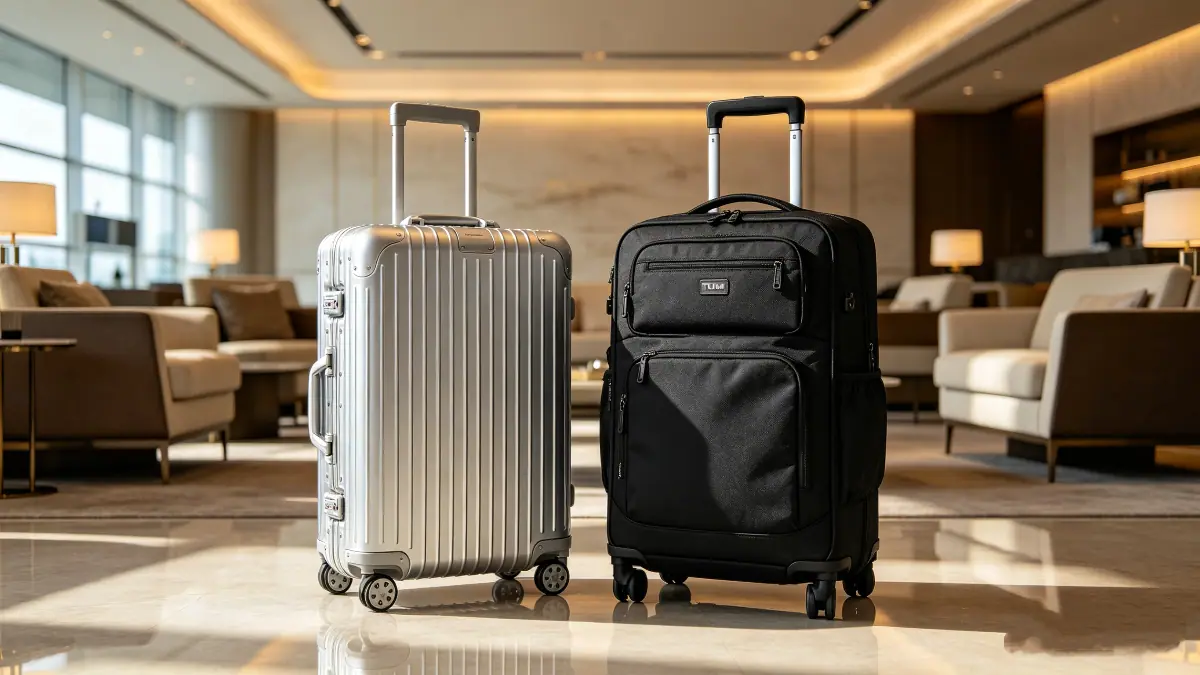 When comparing Rimowa and Tumi carry-on suitcases: Those who value a premium feel and prestige choose Rimowa; those looking for a lightweight suitcase with plenty of storage space choose Tumi. One stands for luxury, the other for business practicality.
Brand Image
Rimowa is part of the luxury conglomerate LVMH and is a high-quality, expensive, and prestigious luggage brand. Because the design is very distinctive, it is used by many celebrities and influencers at the airport. Carrying it signifies good taste and status.
Tumi is the world’s most popular brand for executive business travel. It is practical, spacious, and durable. You could say it is professional gear for business travel, suitable for those who prioritize functionality over prestige.
Rimowa Original vs. Tumi 19 Degree
Both belong to the best and highest-quality lines of their respective brands, yet there are still significant differences in terms of design and practical use.
Appearance
The surface of the Rimowa Original features grooves, which are the brand’s trademark. It looks high-quality and is unmistakable, with a luxurious retro style.
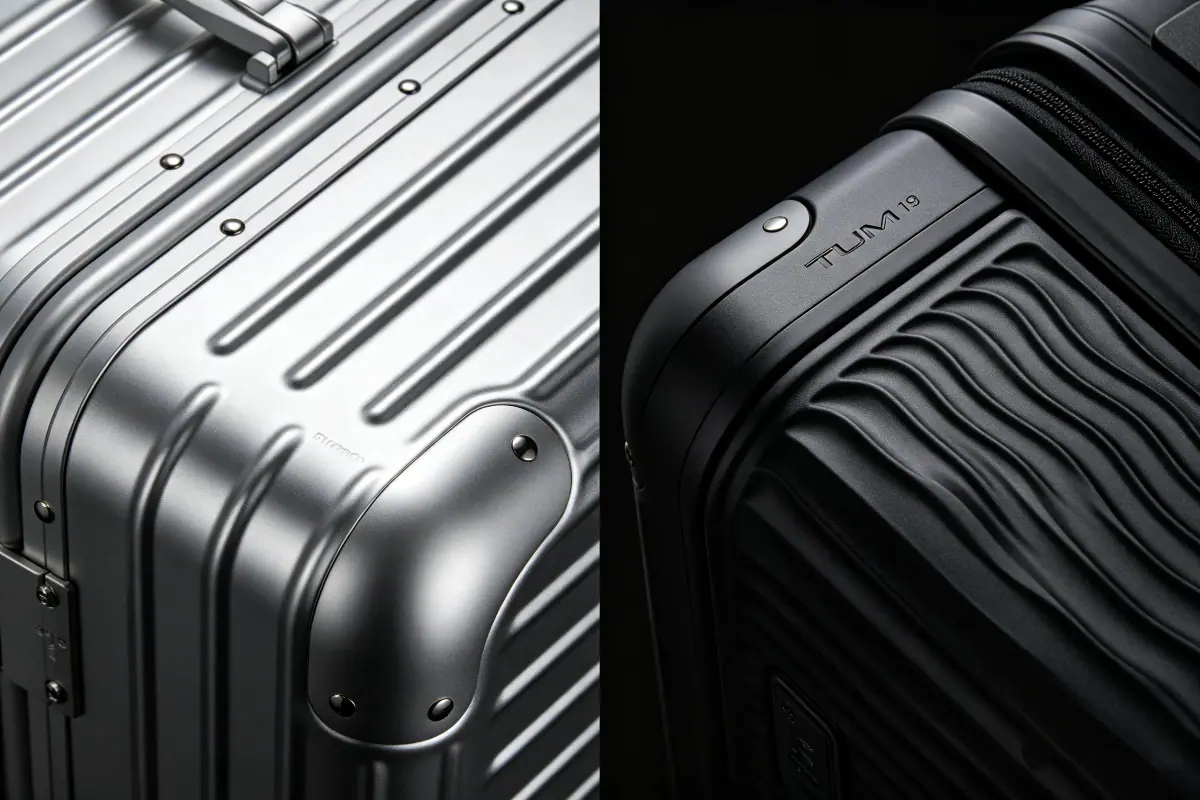
The surface of the Tumi 19 Degree features a wave pattern; the design looks more modern and technological, with a style leaning toward a rugged industrial look.
Weight and Storage Space
The Rimowa Original is lighter overall, making it easier to pull along and carry by hand—its main advantage is its lightness and maneuverability.
The Tumi 19 Degree is slightly heavier but features many interior compartments and a practical layout. The storage space is utilized very well, making it particularly suitable for business trips.
Dents and Scratches
Dents and scratches are quite normal on a Rimowa Original aluminum suitcase. But no one finds this unsightly; on the contrary, they are seen as traces left by the journey.
The Tumi 19 Degree also shows signs of wear from bumps and knocks, but these fit Tumi’s style and give it an even more rugged look without detracting from its appeal.
Although both suitcases are made of aluminum alloy, they differ completely from one another in style and design. The Rimowa Original is a masterpiece of retro luxury, while the Tumi 19 Degree embraces a practical, industrial style.
Carry-on and Checked Luggage
Carry-on
In terms of practicality and comfort, Tumi’s carry-on luggage is far superior to Rimowa’s.
It features numerous small exterior pockets, so you can keep items like your passport, boarding pass, and charger within easy reach without having to open the suitcase. This saves a lot of time both at security checkpoints and when boarding.
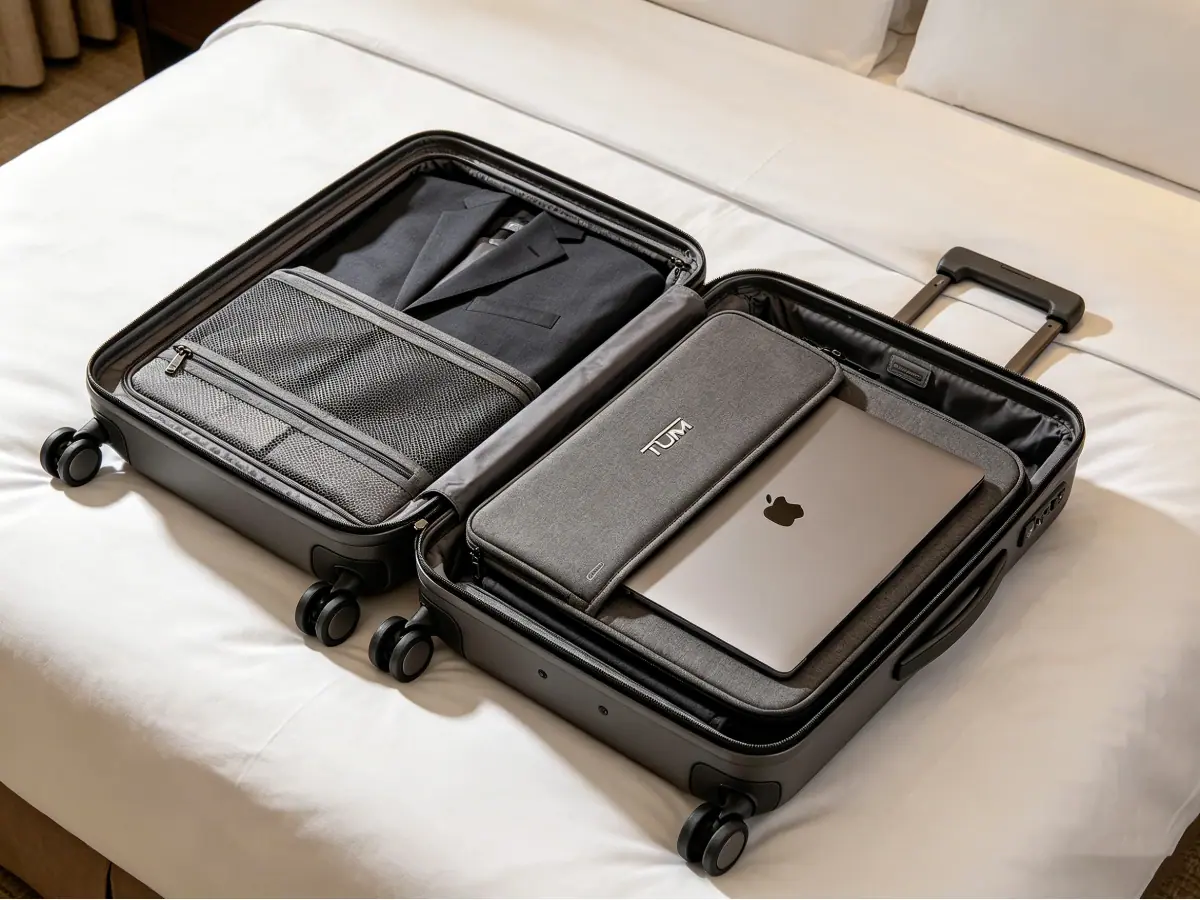
Inside, there’s also a special, padded compartment for laptops where the device can be securely fastened so it won’t get damaged easily—ideal for frequent travelers.
The Rimowa carry-on suitcase looks good and has a simple design. However, it has almost no exterior pockets, and the interior layout is also very basic. You can only stuff things in haphazardly, which makes sorting difficult, and to get to small items, you have to open the entire suitcase.
Luggage
The Rimowa Trunk has an angular, rectangular shape and looks like a small refrigerator. It is particularly deep and spacious and has no annoying dividers. Thick coats, sweaters, and several pairs of shoes can be easily accommodated—ideal for long-haul trips where you need to bring many large items.
The advantages of the Tumi suitcase lie in its many compartments and dividers, which ensure organized storage. The downside is that the interior isn’t as large or deep, so large items won’t fit inside. It’s better suited for short business trips when you aren’t taking much with you and prefer to keep things tidy.
Warranty
Rimowa Lifetime Warranty
Rimowa suitcases purchased in 2022 or later come with a lifetime manufacturer’s warranty. As long as the defect involves core components that occur during normal use—such as deformation of the suitcase structure, defective wheels, or a malfunctioning combination lock—repairs will be performed free of charge.
This is like having lifetime accident insurance for your suitcase: even if it breaks after ten or even twenty years, you can have it repaired by the manufacturer without having to pay for the repair costs yourself.
Tumi: 5-Year Warranty
Tumi’s warranty terms are restrictive and the coverage period is short, which is a significant difference from Rimowa.
The manufacturer covers repair costs only within one year of purchase and for damage not caused by human error.
A limited warranty applies from the second to the fifth year. Only a few core components, such as the shell and wheels, are repaired; for many damaged accessories or minor malfunctions, you must cover the repair costs yourself.
After five years, the brand no longer assumes responsibility for issues with the suitcase. You must cover all repair costs yourself; repairing the wheels or locks on a high-quality suitcase often costs several hundred to a thousand yuan.
Retention of Value
Rimowa is expensive at purchase but retains significant value on the secondhand market; if you resell it after a few years, you’ll hardly incur a loss.
Tumi is slightly cheaper to buy, but isn’t worth much on the secondhand market. The depreciation is high, so you lose a lot of money when reselling it.
If you add up the costs over many years, which brand is more cost-effective?
Rimowa offers a lifetime warranty—if something breaks, you don’t have to pay for the repair yourself. Added to this is the high value retention on the secondhand market, meaning you can still sell the suitcase for a lot of money even after long-term use. Even though the purchase price is high, it’s very cost-effective on average since you don’t incur annual repair costs.
Tumi only offers a five-year warranty; after that, you have to cover the repair costs yourself. Furthermore, it loses value quickly on the secondhand market and doesn’t sell well. Although it’s inexpensive to buy, it doesn’t pay off as well in the long run.
Reviews from Reddit users
A consensus has already formed on Reddit regarding the question of whether Rimowa or Tumi is better. Especially in the communities r/BuyItForLife and r/ManyBaggers, users agree based on their own experience.
If you want to buy a soft-sided suitcase, choose Tumi.
If you want to buy a hard-shell suitcase made of aluminum alloy, choose Rimowa.
Business travelers who regularly discuss travel on Reddit generally agree:
Tumi suitcases made of fabric or ballistic nylon are particularly durable and don’t break easily. The storage design is especially well-suited for businesspeople, as it features many pockets and allows for convenient laptop storage.
Among the numerous suitcases made of fabric, nylon, and canvas, Tumi is already top-tier and is ideal for people who travel for business daily and value practicality and durability.
Rimowa’s aluminum suitcases are manufactured in Germany and are of solid quality. They come with a lifetime warranty, so you won’t have to pay for repairs if they break. Their depreciation is extremely low, meaning they retain significant value even after prolonged use. Among hard-shell suitcases made of aluminum alloy, they are the top choice.
Alternative Brands
Rimowa vs Tumi vs Briggs & Riley
We no longer compare just Rimowa and Tumi, but also include Briggs & Riley. Ultimately, we’ve found that if you feel Rimowa and Tumi don’t meet your core requirements, there are alternative brands that are tailored precisely to your specific needs and are just as good.
If you’re looking for even more comprehensive customer service than Tumi offers, Briggs & Riley is the top choice. That’s because their industry-leading, unconditional lifetime warranty covers all core components and goes far beyond Tumi’s 5-year limited warranty.
Rimowa vs Tumi vs Samsonite
Samsonite features advanced technology in hard-shell suitcases but is significantly more affordable than Rimowa. Therefore, Samsonite is a budget-friendly alternative to Rimowa: the design and durability are good, and you save money.
Many people ask me which brands are roughly on par with Tumi. In addition to the previously mentioned brands Briggs & Riley and Samsonite, you can also check out the “Comparison Guide to High-End Luggage Brands” and the “Guide to Choosing Luggage for Business Travel.”
There you’ll find more detailed information to help you choose a suitcase.
Frequently Asked Questions
Is Tumi a high-end luggage brand?
Yes. Tumi has established itself in the high-end market with ballistic nylon, excellent durability, and a storage design geared toward business travel. The brand positions itself more in the realm of practical “light luxury,” setting it apart from Rimowa, which is considered more of a fashion-forward luxury brand.
Is there a better luggage brand than Rimowa?
When it comes to the unconditional lifetime warranty, Briggs & Riley is better. When it comes to bespoke luxury and brand prestige, brands like Globe-Trotter and Louis Vuitton are even higher-end and more expensive.
Which celebrities use Tumi?
Formula 1 driver Lando Norris and actor Alexander Skarsgård are brand ambassadors and are regularly photographed with Tumi suitcases or bags when they’re on the go.